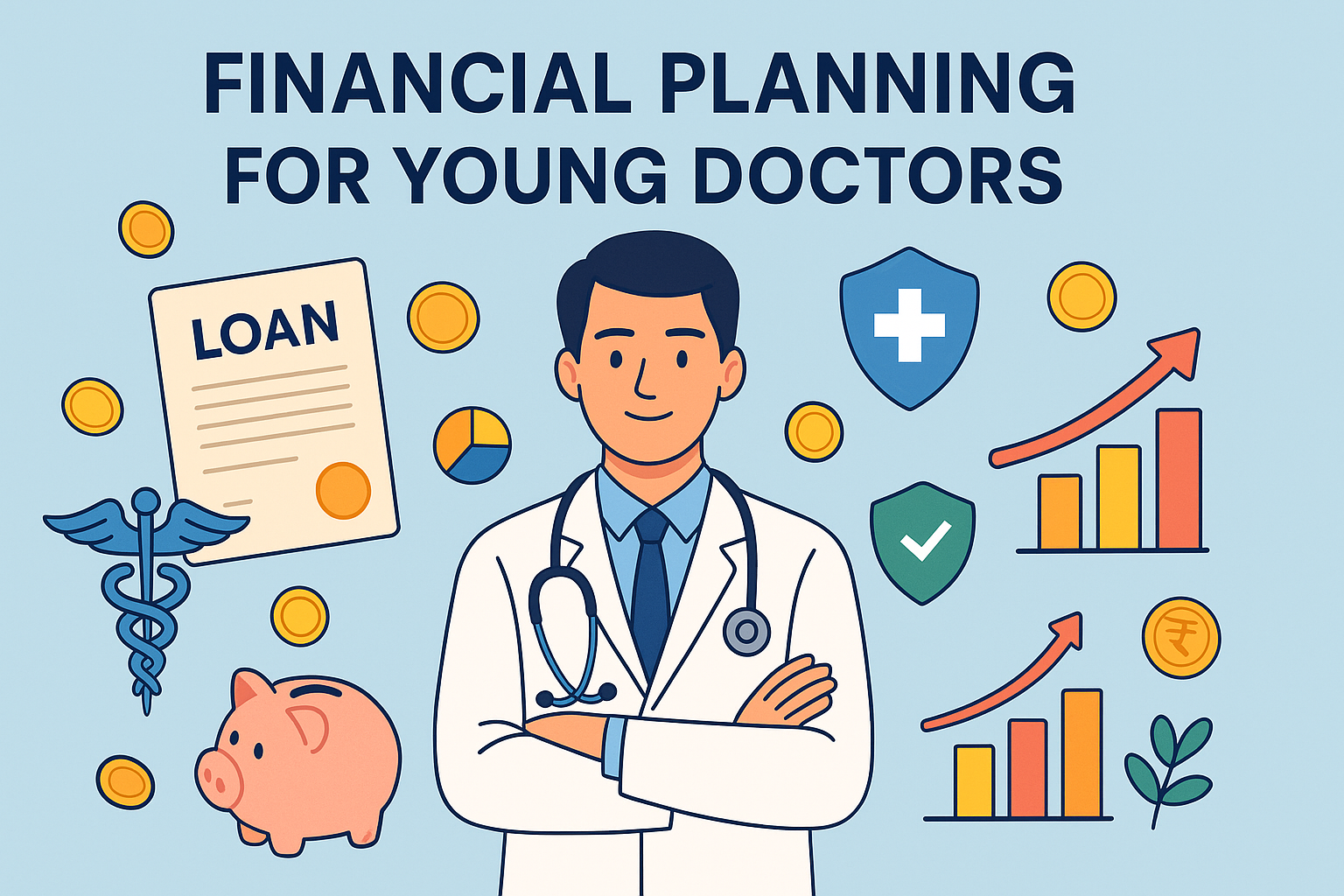
“Financial planning guide for young doctors: Loan repayment, savings, insurance, investing, taxes, retirement, and practical steps using Dr. Joshi’s case study.”
🌟 Smart Money Moves for Young Doctors: A Complete Financial Planning Guide (Case Study: Dr. Joshi, 27)
Starting your career as a doctor is exciting — a new job, a stable income, and the freedom to make your own financial decisions. But this new phase also comes with responsibilities: repaying loans, building savings, protecting your health, and planning for a secure future.
In this guide, we break down a simple, practical, beginner-friendly financial roadmap for young doctors using the real-life profile of Dr. Joshi (27), a bachelor working in a government hospital. Everything is explained in plain language as if you’re discussing money with a close friend. Let’s get started
🧭: Understanding Dr. Joshi’s Profile (The Case Study)
Dr. Joshi is a 27-year-old doctor who has just secured a government job after completing his medical studies. His background is typical of many young doctors:
- Has an education loan
- Limited financial responsibilities
- Stable, but not very high government salary
- Wants to become financially independent
- No major goals like marriage or home purchase yet
This is the perfect stage to build strong money habits that will benefit him for life.
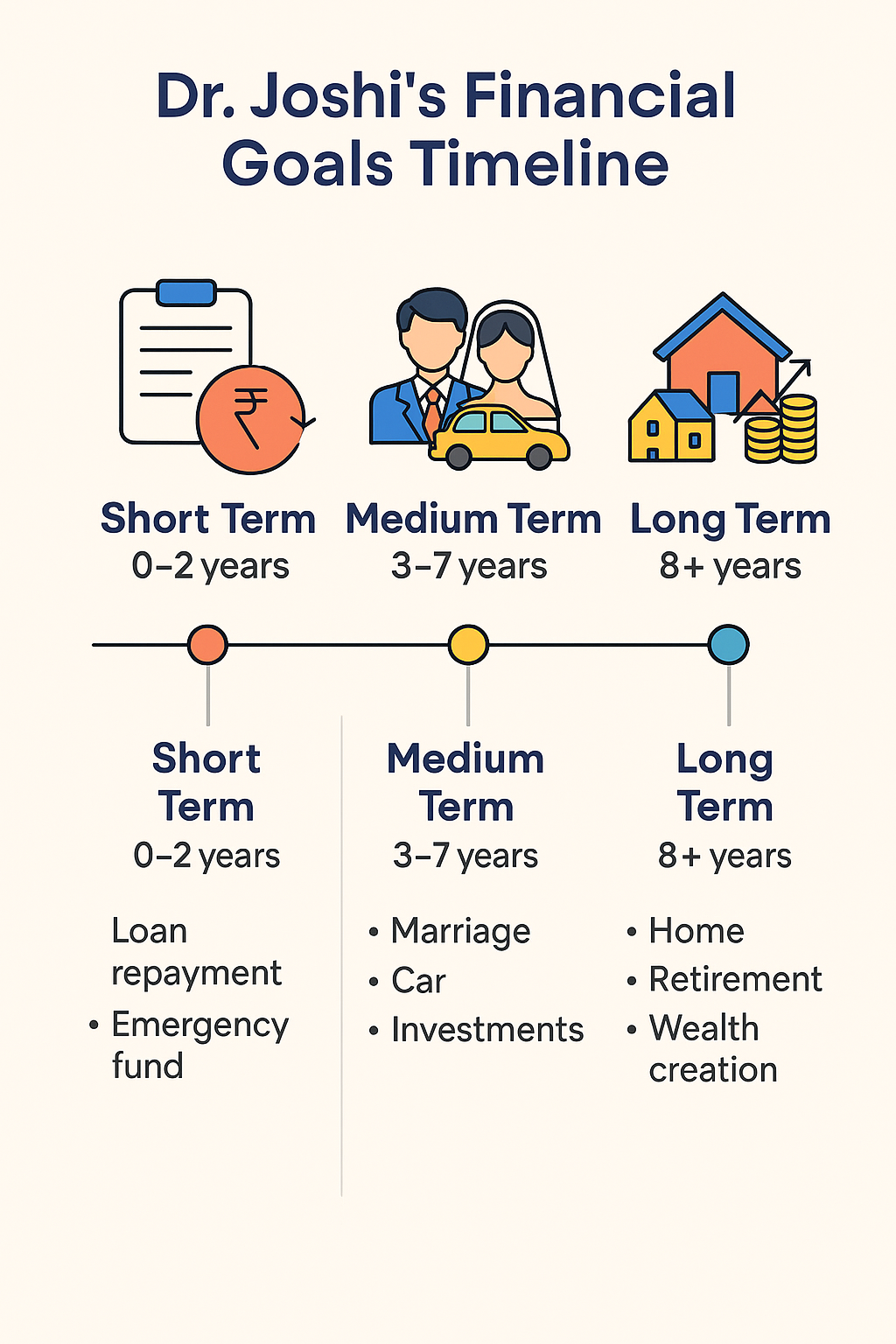
🎯 : Financial Goals for Young Doctor
Even though Dr. Joshi has no dependants or major commitments, he should define the following goals clearly:
1. Short-term Goals
- Repay education loan
- Build emergency fund
- Start health & personal accident insurance
- Control unnecessary expenses
2. Medium-term Goals
- Plan for marriage
- Save for car purchase
- Build an investment portfolio
3. Long-term Goals
- Retirement planning
- Buying a residential property
- Wealth creation
- Financial independence
💡: Savings Strategy — The Foundation of Financial Discipline
Government salaries are stable, but not necessarily high. Many young doctors fall into the trap of lifestyle inflation. Dr. Joshi must first adopt a savings-first mindset.
The 50-30-20 Rule (Beginner Friendly Blueprint)
- 50% – Needs (rent, food, travel, utilities)
- 30% – Wants (shopping, eating out, gadgets)
- 20% – Savings & Investments
If his income is ₹60,000/month, he should save at least ₹12,000/month.
✨ Benefits of Early Saving
- Builds financial discipline
- Helps repay loans faster
- Reduces stress during emergencies
- Offers money for future goals
- Allows early investing → more compounding
- Avoids lifestyle debt
📘 : Loan Repayment Plan — Becoming Debt Free Early
Since education loans often carry 8–10% interest, clearing them quickly offers guaranteed returns.
Why Loan Repayment Must Be the #1 Priority
- Avoids interest accumulation
- Boosts credit score
- Makes future loans (car/home) cheaper
- Gives mental peace
- Frees monthly cash flow
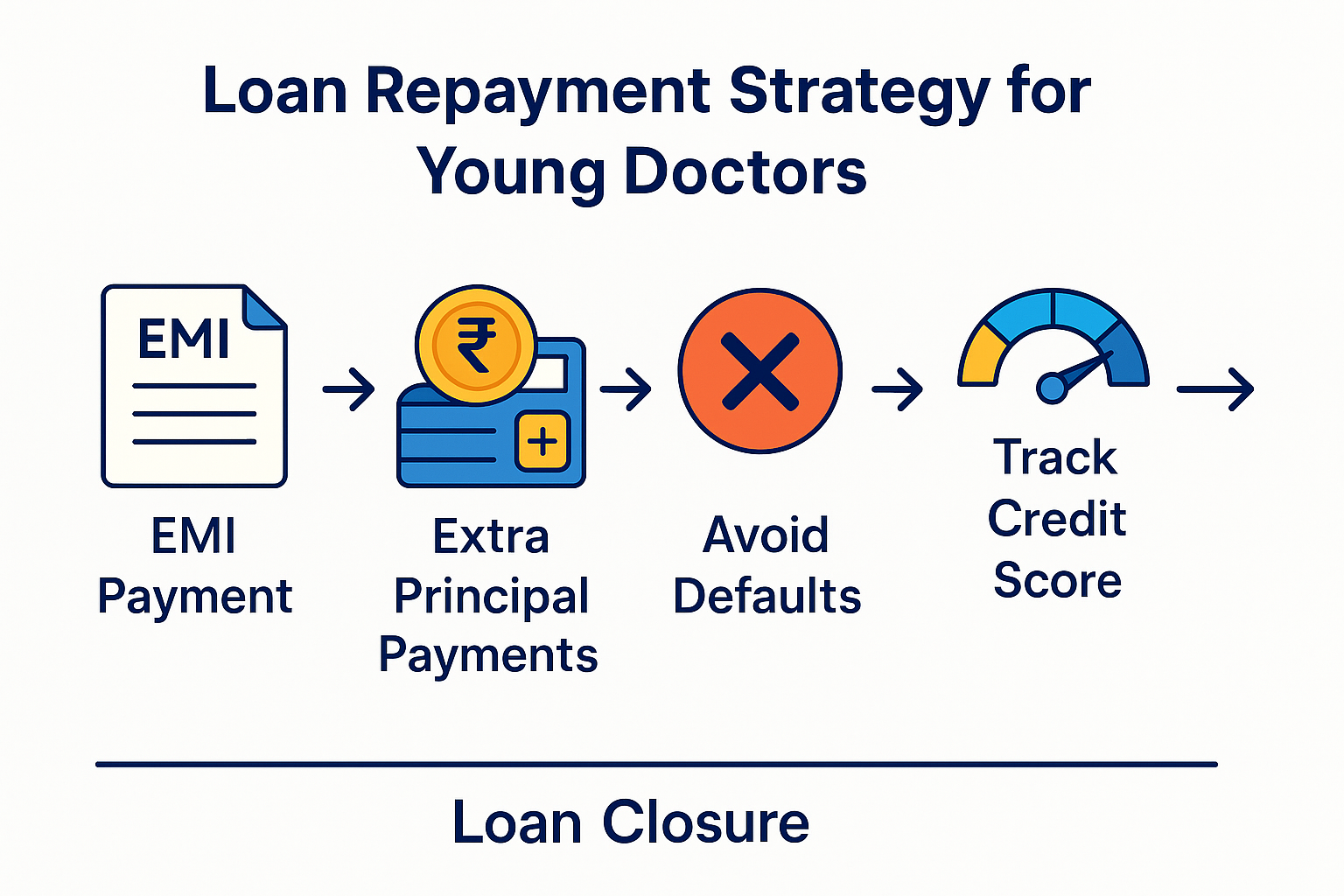
Recommended Strategy
✔️ Pay EMIs regularly
✔️ Allocate extra savings toward principal repayment
✔️ Avoid delaying or defaulting — this harms your credit score
✔️ Close the loan within 2–4 years
⚠️ : Emergency Fund — Your Safety Cushion
Even though Dr. Joshi has job security, emergencies don’t warn before arriving.
Emergency Fund Definition
A financial reserve created to handle unexpected expenses like medical emergencies, urgent travel, sudden repairs, or income disruption.
How Much Should He Save?
📌 6 months of monthly expenses
If his expenses are ₹30,000/month → aim for ₹1.8 lakh.
Where to Keep Emergency Fund?
Choose safe, liquid instruments:
- High-interest savings account
- Liquid mutual funds
- Short-term bank deposits
🛡️: Insurance Planning — Protecting Income, Health & Life
Insurance is not an investment — it’s a protection tool.
🧍♂️: Life Insurance (Optional for Young Doctors)
Since Dr. Joshi is a bachelor with no dependants, life insurance is not mandatory.
But he should consider it if:
- His parents depend on him
- Bank requires loan insurance
- He wants low premiums at a young age
Prefer:
✔️ Term Insurance
✔️ Cover: 10–12 times annual income
🚑 H3: Personal Accident Insurance (Highly Recommended)
This is critical for young doctors.
Why?
Accidents can cause:
- Temporary disability
- Permanent disability
- Loss of income
- Increased medical expenses
A PA policy is very cheap and essential
🏥 : Health Insurance (Must Have)
Even for a doctor, medical emergencies are unpredictable.
Why he should buy early:
- Lower premiums
- Fewer exclusions
- Coverage independent of employer
He should also consider:
- Critical illness insurance
- Super top-up plans
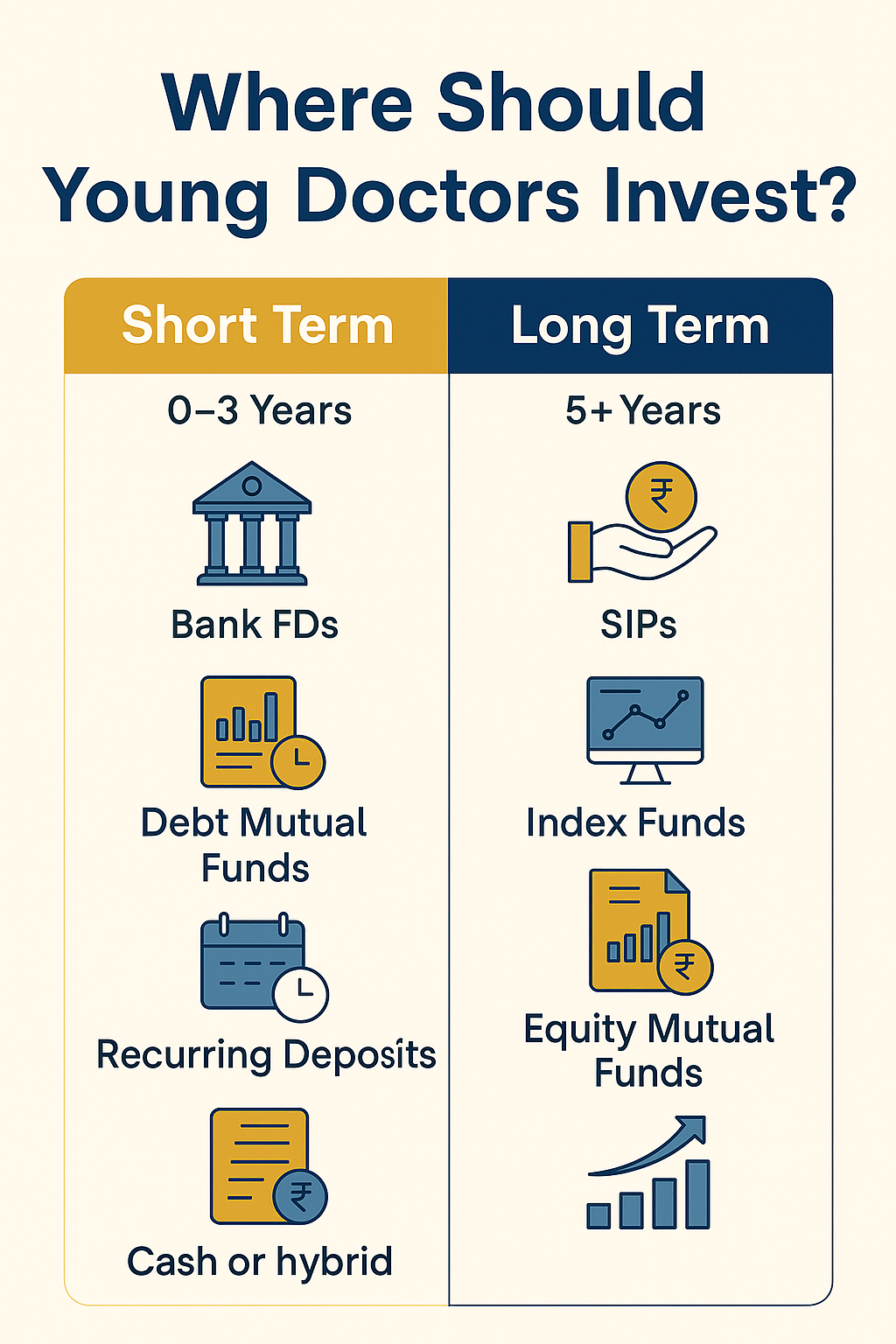
📈: Investing for Short-Term & Long-Term Goals
Once loan & insurance are sorted, Dr. Joshi should begin investing.
Short-Term Goals (0–3 Years)
Use safe, low-risk options:
- Bank FDs
- Short-term debt mutual funds
- Recurring deposits
Goals include:
- Marriage
- Gadget purchases
- Travel
Long-Term Goals (5+ Years)
Use growth-oriented options:
- Equity mutual funds
- Nifty 50 index fund
- Flexi-cap funds
- ELSS funds (also give tax benefit)
Benefits of Starting Early
- Power of compounding
- Higher returns
- Ability to take higher risk when young
- Smaller monthly contributions grow big
💸: Tax Planning for Young Doctors
Dr. Joshi should make full use of available deductions.
Section 80C – Up to ₹1,50,000
Eligible instruments:
- PPF
- ELSS
- Life insurance premiums
- NSC
- 5-year tax-saving FD
Section 80D – Health Insurance
- ₹25,000 for self
- Additional deductions for parents
Education Loan Interest
- Full deduction under Section 80E
- Available for 8 years
🏖️ : Retirement Planning — Start Early, Retire Wealthy
Starting retirement planning at 27 is a superpower.
Why Should Dr. Joshi Start Now?
Because ₹5,000 invested monthly at age 27 grows into:
- ₹1.5 crore+ by age 60 (at 12% return)
- But if he starts at 35 → Only ₹60 lakh
Compounding rewards early starters.
Best Retirement Tools
- NPS
- Equity mutual funds
- PPF
- Index funds
📜: Estate Planning — A Step Most Young Doctors Ignore
Estate planning isn’t only for older people.
Dr. Joshi should:
- Add nominees to all bank accounts
- Add nominees to insurance and MF folios
- Write a simple will once he accumulates assets
Helps his family avoid legal hassles
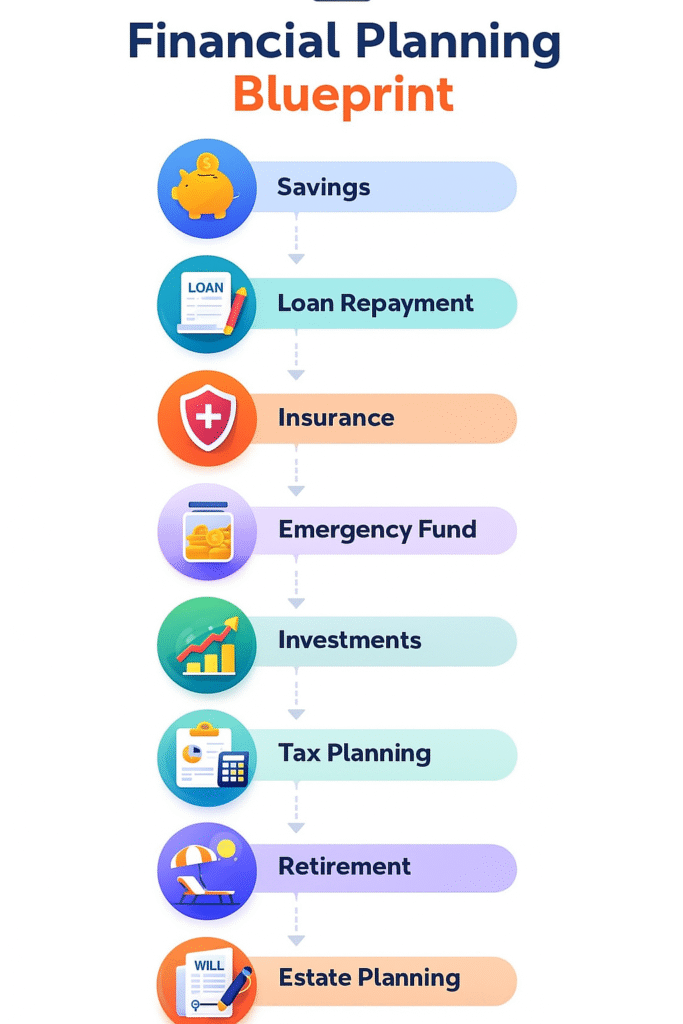
📋: Action Plan Summary Table
| Area | Action |
| Education Loan | Repay on top priority |
| Emergency Fund | Build 6 months buffer |
| Life Insurance | Optional |
| Health Insurance | Must have |
| Personal Accident Policy | Strongly recommended |
| Investments | Choose debt or equity based on goal |
| Tax Planning | Use all eligible exemptions |
| Retirement | Start early via SIP/NPS |
| Estate Planning | Set nominees & prepare will |
📌 Future Trends for Young Doctors (Important for Long-Term Planning)
1. Rise in Medical Inflation
Healthcare costs increasing 12–15% annually → Need more insurance.
2. Growing Opportunities Abroad
Doctors moving to UK, Australia, New Zealand require strong financial discipline.
3. Higher Awareness of Mental Health
Emergency funds & insurance help reduce financial stress.
4. Automation in Personal Finance
AI-based apps will simplify:
- Budgeting
- Investment tracking
- Health records
5. Increasing Importance of Digital Investing
Millennial doctors prefer:
- Index funds
- Robo-advisors
- App-based investments
🏁 Conclusion — Small Steps Today, Big Wealth Tomorrow
Dr. Joshi’s story represents thousands of young doctors beginning their careers. Early financial planning helps them:
✔️ Become debt-free
✔️ Build wealth
✔️ Feel financially secure
✔️ Protect their family
✔️ Live stress-free
✔️ Achieve long-term dreams
A disciplined start at 27 can create a financially confident doctor at 37, a wealthy doctor at 47, and a financially independent doctor at 57.
If you’re a young doctor reading this, remember:
Your career heals people — let your money choices heal your future.
Disclaimer: All charts, diagrams, and examples shared in this article are for educational purposes only. They are not financial advice. Investors should conduct their own research or consult a licensed advisor before investing